
Sump Pump Discharge Lines
serving Lake Orion, Rochester Hills and Troy, MI and all of Oakland, Macomb, and Lapeer County, MI
Sump pump discharge lines play a critical role in managing excess groundwater around residential and commercial properties throughout Oakland, Macomb, and Lapeer County, MI, MI. When a discharge line is improperly installed, blocked, frozen, or poorly routed, water can be redirected back toward foundations, landscaped areas, or neighboring properties. Scots Water Management provides specialized sump pump discharge line services designed to move water safely away from structures while complying with local drainage expectations common throughout Southeast Michigan. Groundwater conditions, seasonal freeze cycles, and heavy rainfall patterns in Oakland and Macomb County make proper discharge line configuration especially important. A well-designed system helps prevent erosion, pooling, foundation saturation, and recurring moisture issues around the home or building exterior.
Understanding Sump Pump Discharge Line Systems
A sump pump discharge line is the pathway that carries water away from a sump basin once the pump activates. While the pump removes water from beneath the structure, the discharge line determines where that water ultimately ends up. If the line is too short, poorly sloped, or incorrectly terminated, water may flow back toward the foundation or freeze during colder months. Scots Water Management focuses on discharge systems that account for soil composition, property grade, municipal drainage considerations, and seasonal weather changes. Every property in Lake Orion, Rochester Hills and Troy, MI presents unique drainage challenges, which is why discharge line planning should never follow a one-size-fits-all approach.
Above-Ground Discharge Lines
Above-ground discharge lines are commonly used where surface grading allows water to flow naturally away from the structure. These systems must be positioned carefully to avoid creating saturated areas near walkways, driveways, or neighboring properties. Proper pitch and termination distance are essential to ensure water disperses effectively.
Buried Discharge Lines
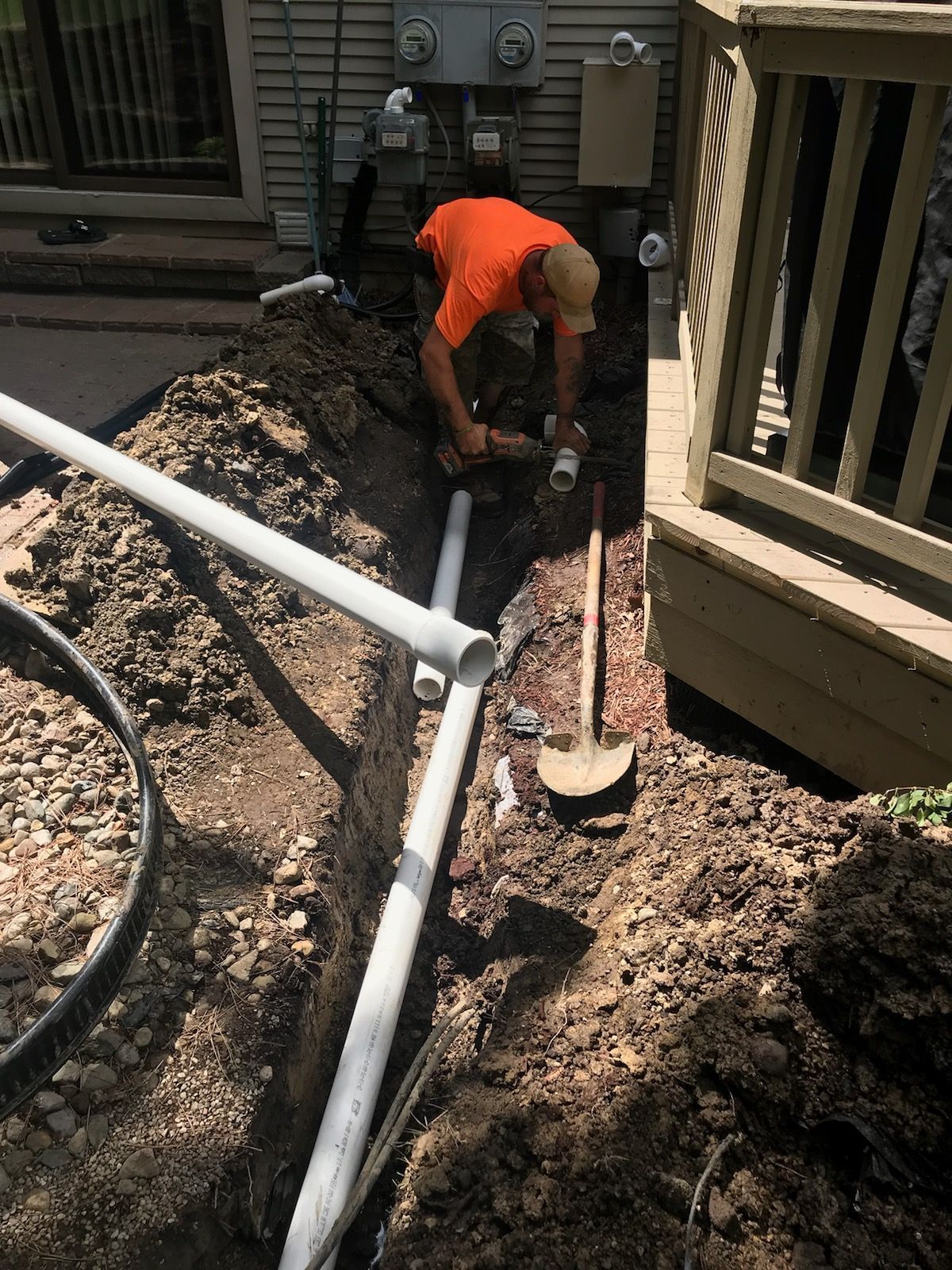
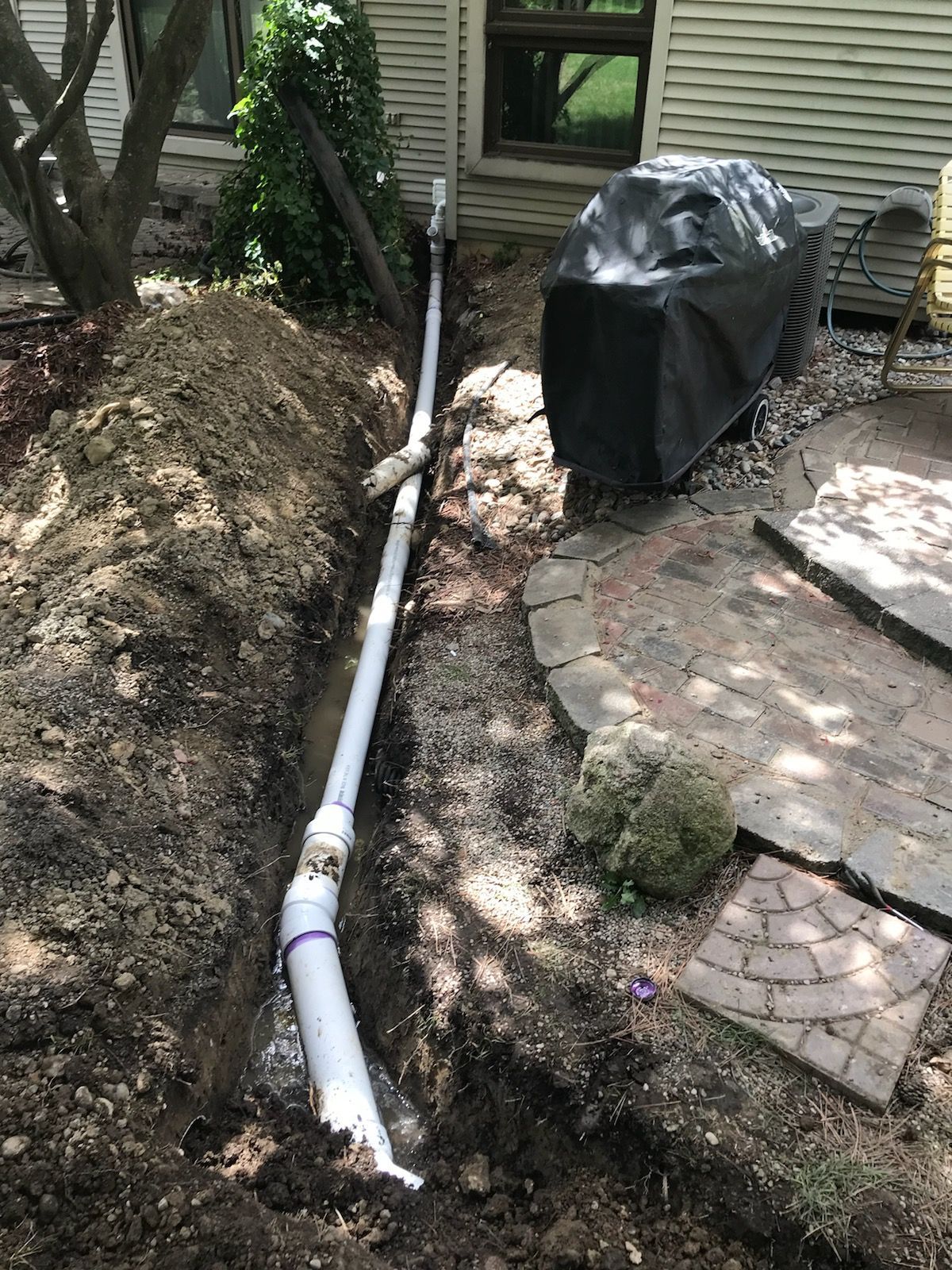
Buried discharge lines are often installed to move water farther away from the foundation while keeping the yard surface clean and functional. These systems typically include freeze-resistant materials and are sloped to encourage consistent water movement. In Oakland, Macomb, and Lapeer County, MI, buried lines must be installed with frost depth, soil expansion, and long-term durability in mind.
Freeze Protection Considerations
Michigan winters can cause serious problems for discharge lines that retain standing water. Frozen discharge lines can lead to pump failure or water backing up into the sump basin. Scots Water Management evaluates discharge routing and material selection to reduce freeze risks and maintain year-round system reliability.
Common Discharge Line Issues in Lake Orion, Rochester Hills and Troy, MI
Many drainage problems originate not from the sump pump itself, but from the discharge line. Local soil conditions and seasonal weather patterns can contribute to recurring issues if systems are not properly designed.
Improper Line Termination
Discharge lines that end too close to the foundation often allow water to recycle back into the soil surrounding the structure. This can increase hydrostatic pressure against foundation walls and contribute to long-term moisture intrusion.
Poor Grading Around Discharge Areas
Even a properly routed discharge line can cause problems if surrounding soil slopes back toward the structure. Standing water near the termination point may lead to erosion or pooling, particularly during heavy rainfall common in Southeast Michigan.
Clogs and Blockages
Leaves, sediment, ice, and debris can obstruct discharge lines over time. Blockages prevent water from exiting the system efficiently and may cause backups during storms or snowmelt periods.
Professional Discharge Line Installation and Adjustments in Lake Orion, Rochester Hills and Troy, MI
Scots Water Management provides discharge line installation and modification services tailored to the specific drainage needs of properties across Oakland, Macomb, and Lapeer County, MI. Each project begins with an assessment of existing water flow patterns, grading conditions, and discharge placement.
New Discharge Line Installation
New discharge lines are designed to direct water safely away from foundations while integrating with the surrounding landscape. Material selection, slope calculations, and termination placement are all handled with long-term performance in mind.
Discharge Line Extensions
Short discharge lines are a common cause of recurring water issues. Extending the line farther from the structure can significantly improve drainage outcomes, especially on properties with flat terrain or clay-heavy soils.
System Corrections and Rerouting
In some cases, existing discharge lines require rerouting due to property changes, landscaping updates, or persistent drainage problems. Adjustments are made to improve flow efficiency without disrupting surrounding structures or surfaces.
Integration With Property Drainage and Grading
Discharge lines function best when they are coordinated with overall property grading and surface drainage. Scots Water Management considers how sump pump discharge interacts with lawn grading, downspout flow, and natural runoff patterns.
Coordination With Lawn Grading
Proper grading ensures discharged water continues moving away from the structure after it exits the line. Poor grading can negate the effectiveness of even a well-installed discharge system.
Compatibility With Retention Areas
Some properties utilize retention ponds or designated drainage areas to manage excess water. Discharge lines can be routed to work in harmony with these systems when local regulations and site conditions allow.
Long-Term Performance and Maintenance Planning
While discharge lines are designed for durability, ongoing monitoring helps prevent unexpected issues. Seasonal temperature changes, soil movement, and surface wear can impact system performance over time. Scots Water Management focuses on durable installations that reduce maintenance needs while remaining adaptable to future property changes. Properly designed discharge lines contribute to stable ground conditions, controlled water movement, and improved exterior moisture management throughout Lake Orion, Rochester Hills and Troy, MI and all of Oakland, Macomb, and Lapeer County, MI.